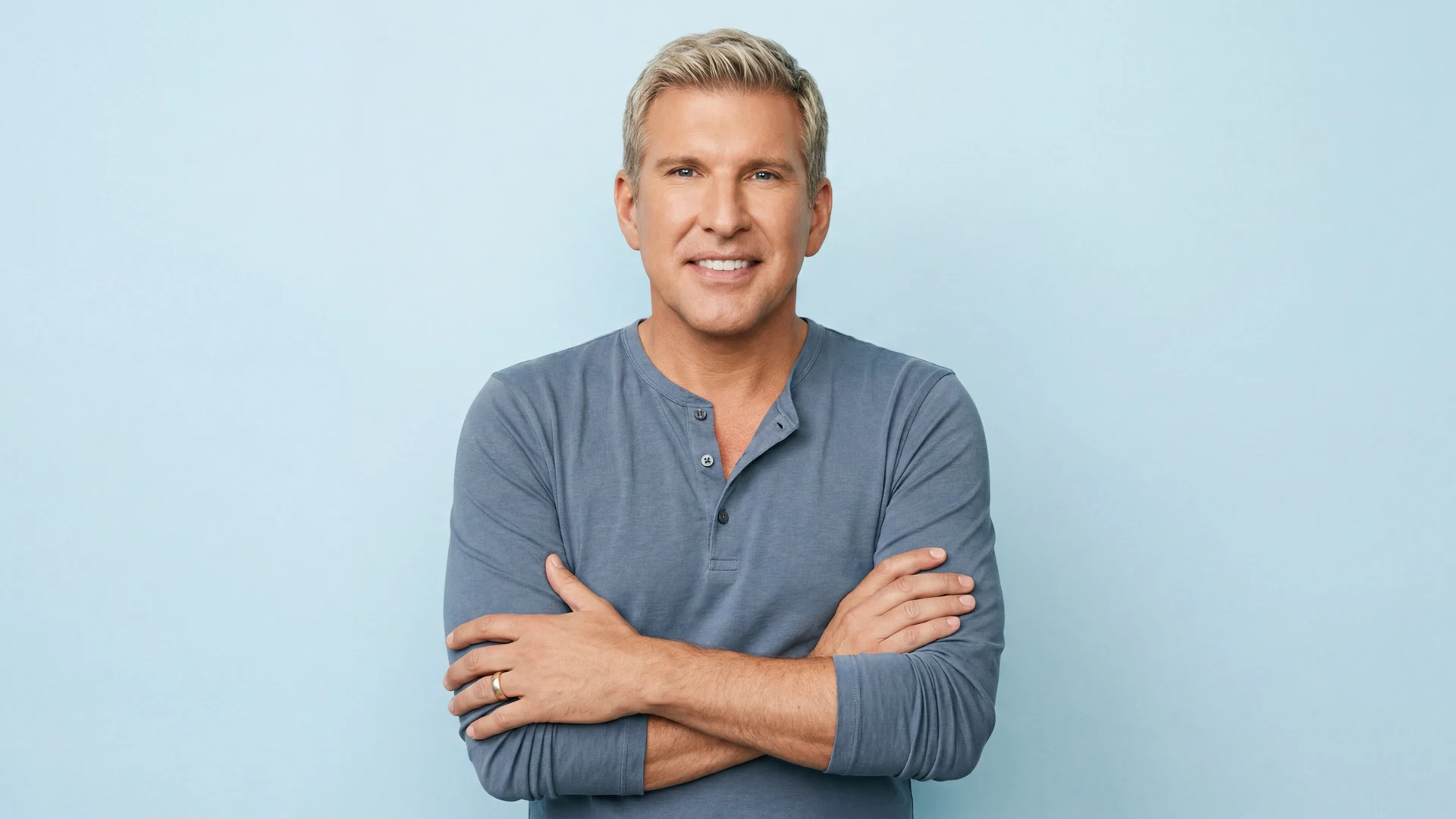
Good Guy Rx
Take care of what God gave you.
Get started
Compounded TirzepatideRx
Weekly GLP-1 + GIP injection.
Compounded SemaglutideRx
Weekly GLP-1 injection.

TadalafilRx
Generic Cialis®. Lasts up to 36 hours.

SildenafilRx
Generic Viagra®. Works in 30 minutes.
FinasterideRx
Generic Propecia®. Blocks DHT daily.

Hair Regrowth SprayRx
3-in-1 topical: finasteride + minoxidil + tretinoin.
Veteran Mental Health Men: Where to Start
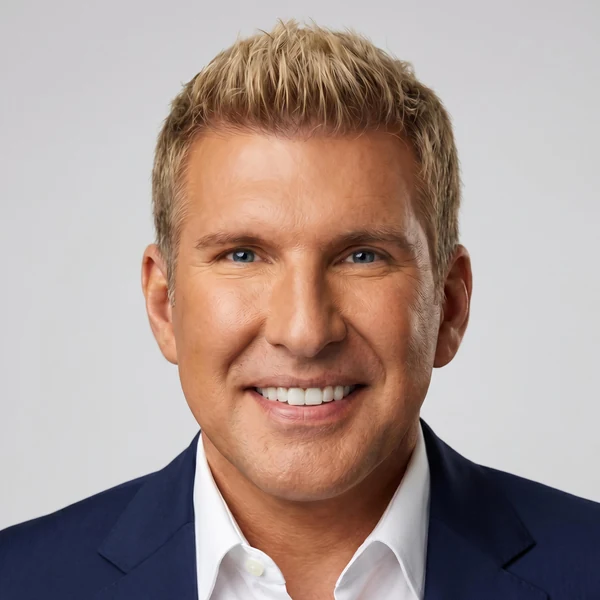
Written by Todd Chrisley
Published May 17, 2026

Key Takeaways
# A Veteran's Guide to Men's Mental Health: What Works, Where to Start
I have been in rooms where the silence was louder than anything. Federal prison has a sound at two in the morning that I will carry with me for the rest of my life. And I will tell you honestly: the hardest thing I have ever done was not walking into a courtroom. It was sitting with myself and admitting that something was broken.
If you served this country, you know a version of that silence. You were trained to carry the weight, keep moving, and never let anyone see the crack. That training kept you alive. But it is keeping some of you from living. And I am not going to stand here and pretend I do not know the difference.
The Numbers Tell a Hard Truth
Men account for approximately 80 percent of suicide deaths in the United States, according to the American Foundation for Suicide Prevention. Yet men represent only about 20 percent of crisis helpline call volume. Read that again. Men are dying at four times the rate they are asking for help. For veterans, the picture is even sharper. The U.S. Department of Veterans Affairs reports that veterans die by suicide at a rate roughly 1.5 times higher than non-veteran adults, after adjusting for age and sex.
This is not a weakness problem. This is a silence problem. And silence, left long enough, becomes something you cannot climb out of alone.
According to the National Institute of Mental Health, major depressive disorder and post-traumatic stress disorder are among the most prevalent and undertreated conditions in men over 45. The Movember Foundation has documented consistently that men are less likely to seek care, less likely to name what they are feeling, and more likely to describe distress in physical terms — exhaustion, irritability, back pain — rather than emotional ones.
I know that man. I was that man.
What I Learned in 28 Months
When I went to federal prison, God did not disappear on me. He got quiet, and I had to get quiet enough to hear Him. That is not a comfortable process. It is the opposite of comfortable. But what I found on the other side of that discomfort was not peace in the greeting-card sense. It was clarity. Steadiness. The ability to look at myself without flinching.
That is what real mental health work actually feels like. Not relief. Clarity.

Here is what I know now that I wish I had known at 50: you cannot maintain a standard you refuse to examine. Men in this season of life — 45, 55, 65 — have built things. Families, businesses, reputations, legacies. And a significant number of them are running on infrastructure they have not inspected in twenty years. The roof holds until it does not.
PTSD, anxiety, depression — these are not character flaws. They are physiological realities. Peer-reviewed research published in the American Journal of Men's Health confirms that chronic stress in men produces measurable changes in cortisol regulation, testosterone production, and neuroplastic function. This is not a soft subject. This is maintenance. And men who ignore maintenance do not look disciplined. They look foolish.
If You Are Sitting Where I Was Sitting
If you have been telling yourself that what you are carrying is just the cost of doing business, I want you to hear this plainly: it is not. Carrying weight without relief is not strength. Strength is knowing what needs to be set down.
The VA mental health support system — whatever its imperfections — offers real resources: cognitive processing therapy, prolonged exposure therapy, and medication-assisted treatment for veteran PTSD. The American Urological Association and the U.S. Preventive Services Task Force both recommend that men discuss mental health screening as a routine part of primary care — not a crisis intervention, but a standing appointment with reality.
You do not have to be in crisis to ask for help. You just have to be honest.
The Practical Turn: Four Things You Can Start This Week
First: tell one person the true version. Not the edited version. Not the version where you are fine. One person. Your wife. Your pastor. A man you trust. Faith-based communities, according to research cited by the National Institute of Mental Health, show measurable benefit in reducing isolation among men with depressive symptoms. Connection is not a luxury. It is medicine.
Second: move your body every single day. A 2023 meta-analysis published in JAMA Psychiatry found that physical exercise reduced symptoms of depression comparably to first-line antidepressant treatment in some populations. Walk thirty minutes. Lift something heavy. Get outside. Results may vary, but the evidence is not ambiguous.
Third: sleep like it is your job. The NIH's National Heart, Lung, and Blood Institute links chronic sleep deprivation in men directly to elevated cortisol, suppressed testosterone, and increased anxiety markers. Seven hours is not indulgence. It is the floor.
Fourth: see a doctor. Not in a year. Not when things get worse. Schedule the appointment this week. If you are a veteran, your VA primary care physician is your first call. If you are not connected to the VA system, your personal physician can order a baseline panel that includes hormonal and mental health screening. You cannot fix what you have not measured.
For men navigating this season:

Some of what you are carrying has a medical dimension — and that dimension deserves the same attention you would give a torn rotator cuff. A technology platform like Good Guy Rx connects men to independent licensed physicians and independent state-licensed pharmacies, so you can have a real clinical conversation about what is happening inside your body — including how hormonal and physiological factors may be affecting your mood, sleep, and capacity. Compounded medications available through affiliated pharmacies are prepared by state-licensed compounding pharmacies in accordance with FDA regulations and are not FDA-approved. If you are ready to have that conversation, start your assessment here.
The Close
Stewardship is the word I come back to. God gave you a body, a mind, and people who need you to show up. That is not a burden. That is a privilege. And privileges require maintenance.
You made it home. Now do the work to stay here — present, clear-eyed, and whole.
Take care of what God gave you.
Sources
- Suicide Statistics — American Foundation for Suicide Prevention — https://afsp.org/suicide-statistics/
- Veteran Suicide Prevention Data — U.S. Department of Veterans Affairs — https://www.mentalhealth.va.gov/suicide_prevention/data.asp
- Men and Mental Health — National Institute of Mental Health — https://www.nimh.nih.gov/health/topics/men-and-mental-health
- Suicide Statistics — National Institute of Mental Health — https://www.nimh.nih.gov/health/statistics/suicide
- Men's Mental Health — Movember Foundation — https://us.movember.com/mens-health/mental-health
- American Journal of Men's Health — SAGE Journals — https://journals.sagepub.com/home/jmh
- Exercise and Depression — JAMA Psychiatry — https://jamanetwork.com/journals/jamapsychiatry
- Sleep Deprivation — NIH National Heart, Lung, and Blood Institute — https://www.nhlbi.nih.gov/health/sleep-deprivation
- VA Mental Health Support — U.S. Department of Veterans Affairs — https://www.mentalhealth.va.gov/
- USPSTF Recommendations — U.S. Preventive Services Task Force — https://www.uspreventiveservicestaskforce.org/
References
- [Veteran Suicide Prevention Data — U.S. Department of Veterans Affairs — https://www.mentalhealth.va.gov/suicide_prevention/data.asp](https://www.mentalhealth.va.gov/suicide_prevention/data.asp)
- [Men and Mental Health — National Institute of Mental Health — https://www.nimh.nih.gov/health/topics/men-and-mental-health](https://www.nimh.nih.gov/health/topics/men-and-mental-health)
- [Suicide Statistics — National Institute of Mental Health — https://www.nimh.nih.gov/health/statistics/suicide](https://www.nimh.nih.gov/health/statistics/suicide)
- [Men's Mental Health — Movember Foundation — https://us.movember.com/mens-health/mental-health](https://us.movember.com/mens-health/mental-health)
- [American Journal of Men's Health — SAGE Journals — https://journals.sagepub.com/home/jmh](https://journals.sagepub.com/home/jmh)
- [Exercise and Depression — JAMA Psychiatry — https://jamanetwork.com/journals/jamapsychiatry](https://jamanetwork.com/journals/jamapsychiatry)
- [Sleep Deprivation — NIH National Heart, Lung, and Blood Institute — https://www.nhlbi.nih.gov/health/sleep-deprivation](https://www.nhlbi.nih.gov/health/sleep-deprivation)
- [VA Mental Health Support — U.S. Department of Veterans Affairs — https://www.mentalhealth.va.gov/](https://www.mentalhealth.va.gov/)
Share this article

Ready to start your journey?
Complete your free online visit and see if GLP-1 treatment is right for you.
Get Started