
Good Guy Rx
Take care of what God gave you.
Get started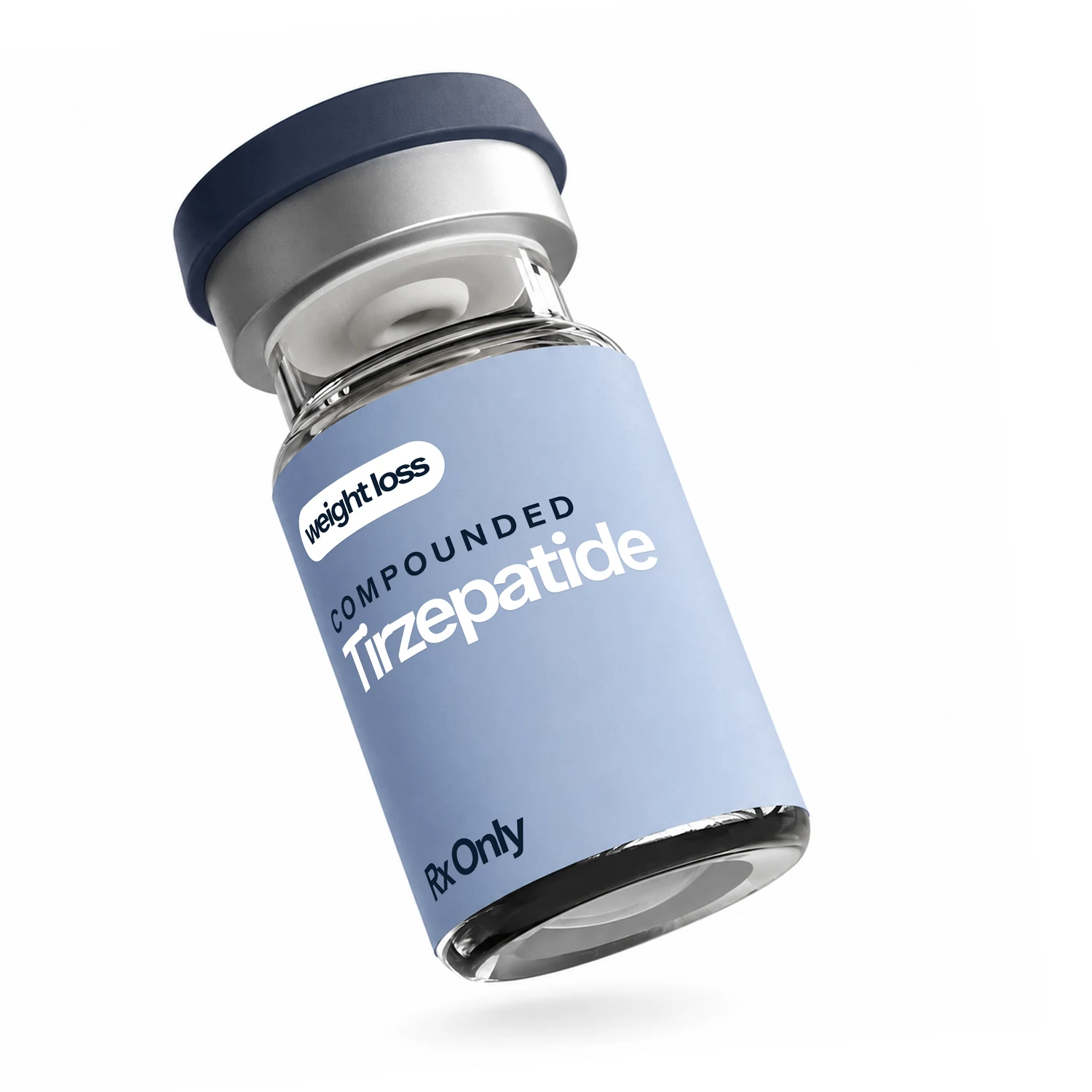
Compounded TirzepatideRx
Weekly GLP-1 + GIP injection.
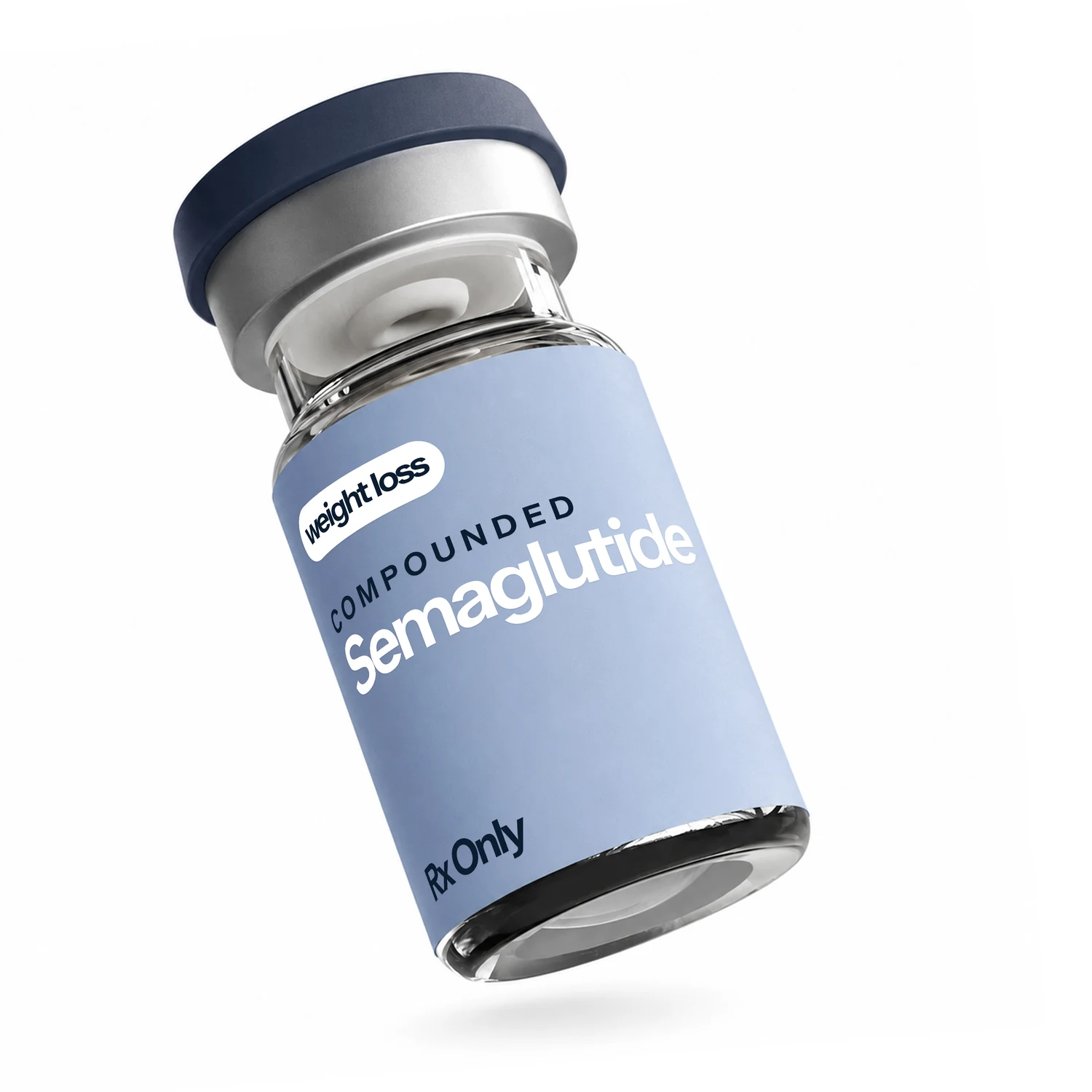
Compounded SemaglutideRx
Weekly GLP-1 injection.
TadalafilRx
Generic Cialis®. Lasts up to 36 hours.
SildenafilRx
Generic Viagra®. Works in 30 minutes.
FinasterideRx
Generic Propecia®. Blocks DHT daily.

Hair Regrowth SprayRx
3-in-1 topical: finasteride + minoxidil + tretinoin.
Tirzepatide vs Semaglutide for Men: A Clinical Comparison

Written by Marcus W.
Published May 14, 2026

Key Takeaways
Tirzepatide and semaglutide are both injectable medications approved for chronic weight management, but they work through different receptor pathways — and the clinical trial data show meaningful differences in outcomes that every man considering treatment should understand.
How Each Drug Works: GLP-1 vs GIP
To compare these two medications, you need to understand their targets.
Semaglutide is a glucagon-like peptide-1 (GLP-1) receptor agonist. GLP-1 is a hormone your gut releases after eating. It signals the pancreas to release insulin, slows gastric emptying (so food moves through your stomach more slowly), and acts on areas of the brain that regulate appetite and satiety. Semaglutide mimics this hormone at a far higher potency and duration than your body produces naturally.
Tirzepatide does everything semaglutide does — and adds a second mechanism. It is a dual GLP-1 and glucose-dependent insulinotropic polypeptide (GIP) receptor agonist. GIP is a separate gut hormone that also influences insulin secretion, fat storage, and energy expenditure. By activating both receptors simultaneously, tirzepatide engages two complementary pathways rather than one. This dual agonism is the central pharmacological distinction between the two agents.
The Evidence Base: STEP Trials vs SURMOUNT Trials
Semaglutide — The STEP Program
The STEP trials (Semaglutide Treatment Effect in People with Obesity) were a series of phase 3 randomized controlled trials published between 2021 and 2022, primarily in the New England Journal of Medicine.
The landmark STEP 1 trial enrolled 1,961 adults without diabetes and randomized them to weekly subcutaneous semaglutide 2.4 mg or placebo alongside lifestyle intervention. At 68 weeks, the semaglutide group achieved significantly greater body weight reduction compared to placebo. Results may vary. The trial population was approximately 74% female, which limits direct extrapolation to male patients, though the directional benefit was consistent across subgroups.
STEP 3 added intensive behavioral therapy to semaglutide and demonstrated additional weight reduction, reinforcing that medication works most effectively alongside dietary and activity changes. STEP 5 extended follow-up to 104 weeks, confirming that weight reduction is sustained with continued use but largely reverses upon discontinuation.
Tirzepatide — The SURMOUNT Program
The SURMOUNT trials evaluated tirzepatide in adults with obesity or overweight with at least one weight-related comorbidity. SURMOUNT-1, published in the New England Journal of Medicine in 2022, enrolled 2,539 participants and tested three doses (5 mg, 10 mg, and 15 mg weekly) against placebo over 72 weeks.

At the highest dose (15 mg), participants achieved a mean body weight reduction that was numerically larger than what was observed in STEP 1 — though direct cross-trial comparisons are methodologically limited by differences in study design, populations, and endpoints. Results may vary. A head-to-head trial called SURMOUNT-5, published in 2025, compared tirzepatide 10 mg and 15 mg directly against semaglutide 2.4 mg in adults with obesity. Tirzepatide demonstrated statistically greater weight reduction at both doses compared to semaglutide over 72 weeks. Results may vary.
SURMOUNT-2 evaluated tirzepatide specifically in adults with type 2 diabetes mellitus (T2DM), a population highly relevant to men in the 45–70 age range, where T2DM prevalence is substantial. Weight reduction and glycemic improvements were both clinically meaningful in this cohort.
Who Is — and Is NOT — a Candidate
A prescribing provider will typically consider either medication for men with a body mass index (BMI) of 30 or greater, or a BMI of 27 or greater with at least one weight-related condition such as hypertension, T2DM, or dyslipidemia (elevated cholesterol or triglycerides).
Absolute contraindications for both medications include: - Personal or family history of medullary thyroid carcinoma (MTC) - Multiple Endocrine Neoplasia syndrome type 2 (MEN 2) - Known hypersensitivity to either active ingredient
Use requires careful evaluation in men with: - A history of pancreatitis (inflammation of the pancreas) - Severe gastrointestinal disorders, including gastroparesis (delayed gastric emptying) - Active kidney disease, particularly with dehydration risk - Use of insulin or insulin secretagogues (dose adjustments required)
Neither medication is appropriate for men seeking short-term weight loss alone. Both are indicated for chronic, long-term weight management.
What to Expect on Treatment
Both medications are administered as weekly subcutaneous (under-the-skin) injections. Both follow a dose escalation schedule — starting low and increasing gradually over months — to minimize gastrointestinal side effects.
Common side effects (both agents): - Nausea (most frequent, typically during dose escalation) - Vomiting - Diarrhea or constipation - Decreased appetite
Most gastrointestinal symptoms are mild-to-moderate, peak during escalation, and improve at maintenance dose. Results may vary.
Call your provider promptly if you experience: - Persistent, severe abdominal pain (possible pancreatitis) - Signs of a serious allergic reaction (rash, swelling, difficulty breathing) - Significant changes in vision (relevant in patients with diabetic retinopathy) - Symptoms of hypoglycemia (low blood sugar) if you are also on insulin
Weight reduction with both agents is gradual. Meaningful changes are generally observed at 12–16 weeks, with continued progress through 52–72 weeks at maintenance dose. Discontinuing either medication typically results in partial or complete weight regain, as demonstrated in STEP 4 extension data published in JAMA.

A Note on Men's Health This Month
May is Mental Health Awareness Month. It bears stating directly: men account for approximately 80% of suicide deaths in the United States yet represent only about 20% of crisis helpline callers, according to data from the American Foundation for Suicide Prevention (AFSP). The Movember Foundation's research consistently identifies that men delay seeking help — for mental health and for physical health alike.
Chronic obesity is not simply a metabolic issue. Peer-reviewed research published in Diabetes Care and other journals has documented bidirectional associations between obesity, testosterone deficiency (low T), depression, and reduced quality of life in men. Addressing weight through evidence-based treatment is one component of comprehensive men's health — not the whole picture. If you are struggling emotionally, please reach out to a licensed mental health provider or contact the 988 Suicide and Crisis Lifeline by calling or texting 988.
The Good Guy Rx Pathway
Good Guy Rx is a technology platform that connects men to independent licensed physicians and independent state-licensed pharmacies. If you are considering either medication, the prescribing provider determines whether tirzepatide or semaglutide is appropriate after a thorough medical intake — reviewing your health history, current medications, labs, and contraindications. Compounded formulations, where applicable, are prepared by state-licensed compounding pharmacies in accordance with FDA regulations and are not FDA-approved. Direct all clinical questions to your provider through the patient portal.
Sources
- STEP 1 Trial — Wilding et al., 2021 — New England Journal of Medicine
- STEP 5 Trial — Garvey et al., 2022 — Nature Medicine
- STEP 4 Withdrawal Trial — Rubino et al., 2021 — JAMA
- SURMOUNT-1 Trial — Jastreboff et al., 2022 — New England Journal of Medicine
- SURMOUNT-2 Trial — Garvey et al., 2023 — The Lancet01200-X/fulltext)
- Suicide Statistics — American Foundation for Suicide Prevention
- Movember Foundation Men's Health Research
- 988 Suicide and Crisis Lifeline — SAMHSA
This article is educational. A licensed provider determines whether you are a candidate after a medical intake.
References
- STEP Trial
- SURMOUNT Trial
- STEP trial
- SURMOUNT trial
- [STEP 5 Trial — Garvey et al., 2022 — Nature Medicine](https://www.nature.com/articles/s41591-022-01916-3)
- [STEP 4 Withdrawal Trial — Rubino et al., 2021 — JAMA](https://jamanetwork.com/journals/jama/fullarticle/2777886)
- [SURMOUNT-1 Trial — Jastreboff et al., 2022 — New England Journal of Medicine](https://www.nejm.org/doi/full/10.1056/NEJMoa2206038)
- [SURMOUNT-2 Trial — Garvey et al., 2023 — The Lancet](https://www.thelancet.com/journals/lancet/article/PIIS0140-6736(23)01200-X/fulltext)
Share this article

Ready to start your journey?
Complete your free online visit and see if GLP-1 treatment is right for you.
Get Started