
Good Guy Rx
Take care of what God gave you.
Get started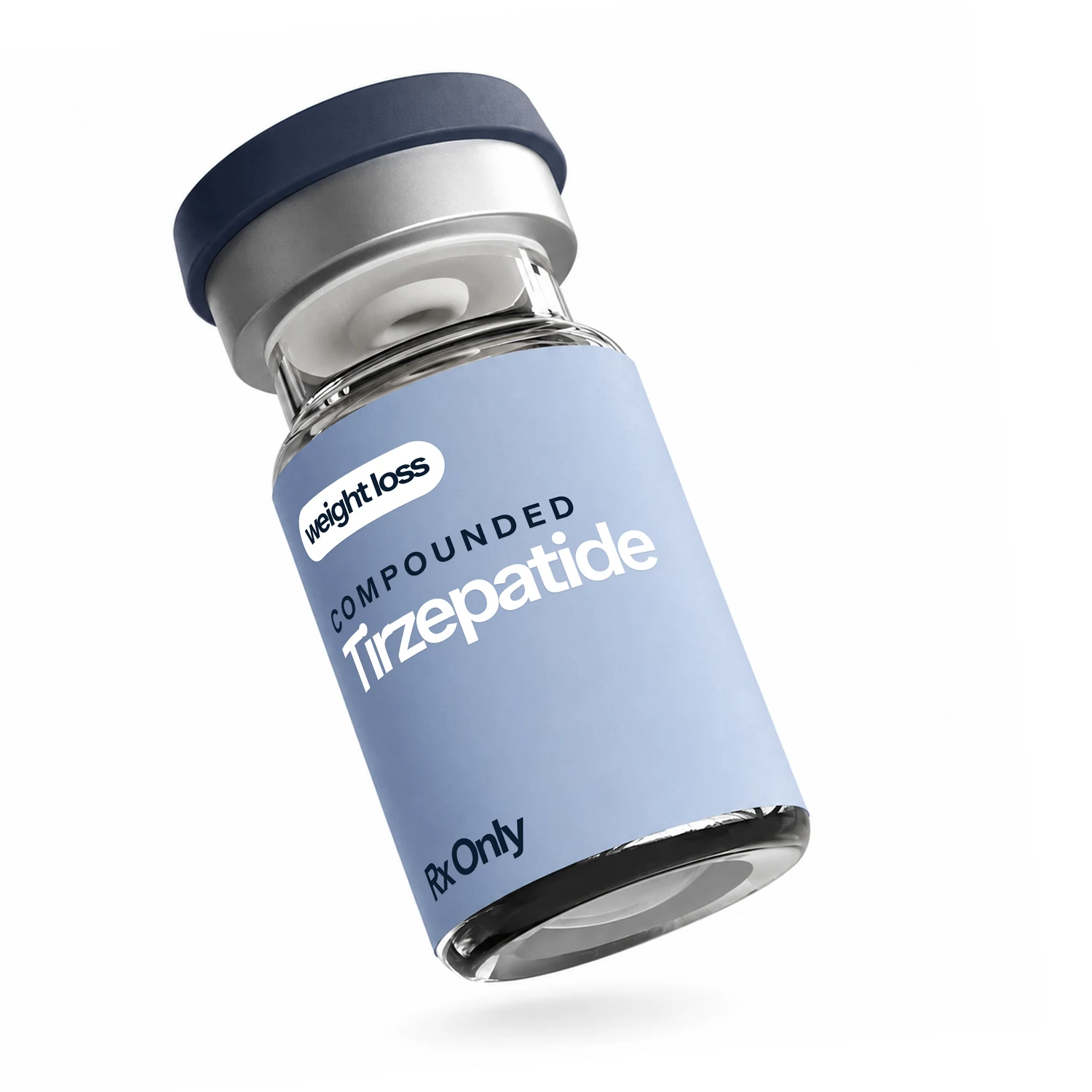
Compounded TirzepatideRx
Weekly GLP-1 + GIP injection.
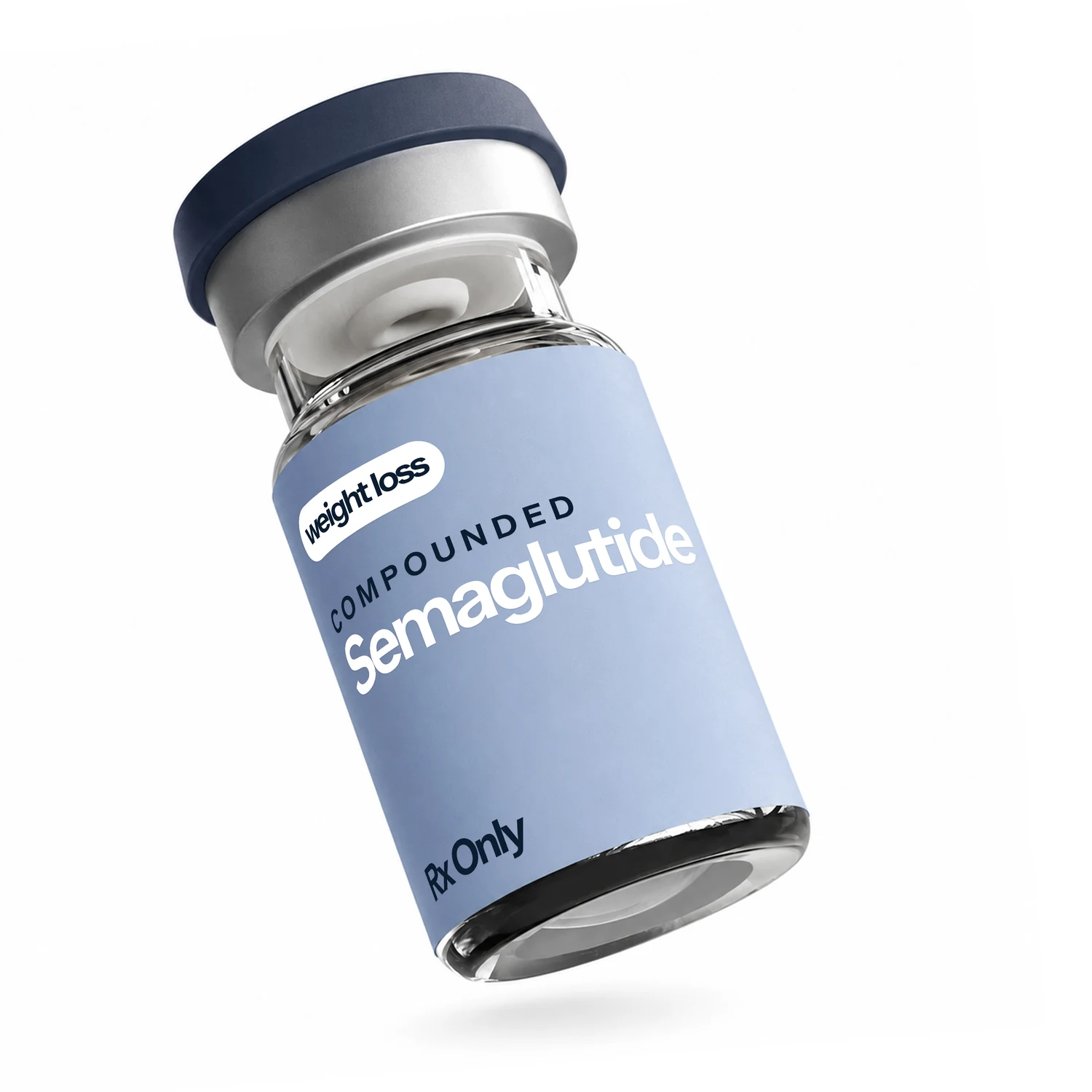
Compounded SemaglutideRx
Weekly GLP-1 injection.
TadalafilRx
Generic Cialis®. Lasts up to 36 hours.
SildenafilRx
Generic Viagra®. Works in 30 minutes.
FinasterideRx
Generic Propecia®. Blocks DHT daily.

Hair Regrowth SprayRx
3-in-1 topical: finasteride + minoxidil + tretinoin.
Weight Loss Maintenance Men: Keeping It Off

Written by David K.
Published April 15, 2026

Key Takeaways
# Maintenance Is the Work: Keeping the Weight Off After a Successful Cut
If you typed "weight loss maintenance men" into a search bar, you already know the harder half of the equation. Getting the weight down is one thing. Keeping it there is the work that most programs never talk about — because there is no dramatic before-and-after to sell. Weight loss maintenance is quieter, longer, and, for most men, the part that actually determines whether any of this was worth doing.
This article covers what the research says, what happens physiologically when you stop a medication or reduce calories, and what a sustainable structure looks like for a man in his 40s, 50s, or 60s.
Why the Body Fights Back
The first thing to understand is that regain is not a willpower failure. It is a biological event.
When you lose a significant amount of weight — whether through diet, exercise, medication, or a combination — your body reads that as a threat. According to research published in *Obesity*, the body responds to weight loss by reducing resting metabolic rate (the calories you burn at rest) and increasing circulating levels of ghrelin, the hormone that drives hunger. Both changes persist long after the weight comes off. Your body, in effect, remembers the higher weight and works to return to it.
This is not a character defect. It is adaptive thermogenesis — a well-documented physiological response that researchers have observed across decades of clinical data. The National Institutes of Health has acknowledged that long-term weight management requires active, ongoing intervention precisely because of these metabolic adaptations.
The practical implication: the man who lost 30 pounds and then stopped doing anything will, on average, regain most of it within two to five years. Results may vary. But the biology is not on the side of passivity.
What Happens After GLP-1 Therapy
GLP-1 receptor agonists — medications like semaglutide and tirzepatide — work by mimicking a naturally occurring gut hormone that signals satiety, slows gastric emptying, and reduces appetite. They are among the most studied weight-management medications in recent clinical history.
The STEP trials, which studied semaglutide in adults with obesity, demonstrated meaningful weight reduction over 68 weeks. The SURMOUNT trials, studying tirzepatide, showed comparable or greater results. But both trial programs also produced a consistent follow-up finding: when participants discontinued the medication, a substantial portion of the lost weight returned. A 2022 study in [Diabetes Care](https://diabetesjournals.org/care) following STEP 1 participants one year after discontinuation found that most of the lost weight had been regained by week 120.
This is not a failure of the medication. It confirms what the biology already tells us: GLP-1 medications address an active hormonal environment. When the medication is withdrawn, that environment reasserts itself.
Long-term semaglutide use, or a carefully managed taper with physician oversight, is one legitimate pathway. Another is building the behavioral and dietary structures that can carry some of the load the medication was carrying. Most men who maintain well after a cut use both.

The Four Pillars of Keeping the Weight Off
Peer-reviewed research points to four consistent factors in successful long-term maintenance. None of them are new. All of them require discipline.
1. Consistent protein intake. Dietary protein does two things that matter in maintenance: it preserves lean muscle mass (which is your primary metabolic engine), and it produces satiety per calorie more efficiently than carbohydrates or fat. Research in the *American Journal of Men's Health* and related literature consistently supports higher protein targets — roughly 0.7 to 1.0 grams per pound of body weight — for men managing weight long-term.
2. Resistance training. Adaptive thermogenesis lowers your metabolic rate. Muscle mass raises it. The CDC recommends at least two sessions of muscle-strengthening activity per week for adults. For men post-cut, this is not optional maintenance — it is the primary mechanism for defending a lower body weight over time.
3. Regular self-monitoring. A large body of research, including data from the National Weight Control Registry, shows that people who maintain significant weight loss over time weigh themselves regularly — most often weekly. The number on the scale is not a moral verdict. It is data. Men who ignore it tend to drift; men who track it tend to course-correct early.
4. Structured eating patterns. Irregular meals, high-calorie social eating without any anchor, and prolonged periods of low awareness around food are among the strongest predictors of regain. This does not mean rigid restriction. It means that maintenance requires a consistent framework — not perfection, but structure.
A Note on This Month: Take Care of the Whole Body
April is Testicular Cancer Awareness Month. Good stewardship of your body does not stop at the scale.
Testicular cancer is the most common cancer in men between 15 and 35, but it does not disappear as a concern in middle age. The Movember Foundation and the American Cancer Society both recommend that men of all ages maintain awareness of changes in their bodies — including regular self-examination of the testes for unusual lumps, swelling, or changes in size or shape.
A self-check takes less than five minutes. If you have not spoken with your provider about this, it is a reasonable item to raise at your next visit. Caring for the body you have worked to restore is the point of all of this. Do not neglect what is easy to check.
Where Good Guy Rx Fits
Good Guy Rx is a technology platform. It connects men to independent licensed physicians and independent state-licensed pharmacies. It does not manufacture medications and does not operate a pharmacy.
For men managing weight, the platform offers access to two compounded GLP-1 medications prepared by state-licensed compounding pharmacies in accordance with FDA regulations. These medications are not FDA-approved compounded products, but they are prepared under the oversight of licensed compounding pharmacies and prescribed by independent licensed physicians following a clinical consultation.
If you completed a cut with GLP-1 support and are now asking what comes next — whether that is a maintenance dose, a structured taper, or a new protocol — that conversation belongs with a licensed provider, not a support inbox.

- Semaglutide — compounded semaglutide, prepared by a state-licensed compounding pharmacy, prescribed after an independent physician consultation.
- Tirzepatide — compounded tirzepatide, same pathway.
Results may vary. A licensed provider will review your history, current weight, and goals before recommending any continuation or change in protocol.
What to Do Next
Step 1: Schedule a maintenance consultation. If you lost weight with GLP-1 support and are approaching or have passed the end of your initial protocol, request a follow-up through the patient portal. Ask your provider directly about maintenance dosing options and what the evidence supports for your specific situation.
Step 2: Build your protein and training baseline now. Do not wait until after you stop medication to build the habits that will carry you. Start resistance training and hit your protein targets while the medication is still reducing appetite. Use the easier environment to build the harder structure.
Step 3: Set a weekly weigh-in day. Pick one morning per week, same conditions. Log it. That is the earliest-warning system you have. A three-pound drift caught early is a course correction. A fifteen-pound drift caught late is a restart.
Step 4: Raise the self-check conversation with your provider. Since April is Testicular Cancer Awareness Month, it is a reasonable time to ask your independent licensed physician about a full physical inventory — not just weight, but the whole body you are stewarding.
Sources
- Adaptive thermogenesis in humans — *Obesity* — https://onlinelibrary.wiley.com/journal/1930739x
- STEP 1 trial — weight regain after semaglutide discontinuation — *Diabetes Care* — https://diabetesjournals.org/care
- SURMOUNT trial program overview — *New England Journal of Medicine* — https://www.nejm.org
- Physical Activity Guidelines for Americans — CDC — https://www.cdc.gov/physicalactivity/
- Long-term weight management — NIH / NHLBI — https://www.nhlbi.nih.gov/
- National Weight Control Registry — NWCR — https://www.nwcr.ws/
- Testicular cancer awareness — Movember Foundation — https://us.movember.com/
- Testicular cancer overview — American Cancer Society — https://www.cancer.org/
This article is for informational purposes only and does not constitute medical advice. Talk with a licensed provider through the patient portal before starting any treatment.
References
- STEP trial
- SURMOUNT trial
- [STEP 1 trial — weight regain after semaglutide discontinuation — *Diabetes Care* — https://diabetesjournals.org/care](https://diabetesjournals.org/care)
- [SURMOUNT trial program overview — *New England Journal of Medicine* — https://www.nejm.org](https://www.nejm.org)
- [Physical Activity Guidelines for Americans — CDC — https://www.cdc.gov/physicalactivity/](https://www.cdc.gov/physicalactivity/)
- [Long-term weight management — NIH / NHLBI — https://www.nhlbi.nih.gov/](https://www.nhlbi.nih.gov/)
- [National Weight Control Registry — NWCR — https://www.nwcr.ws/](https://www.nwcr.ws/)
- [Testicular cancer awareness — Movember Foundation — https://us.movember.com/](https://us.movember.com/)
Share this article

Ready to start your journey?
Complete your free online visit and see if GLP-1 treatment is right for you.
Get Started