
Good Guy Rx
Take care of what God gave you.
Get started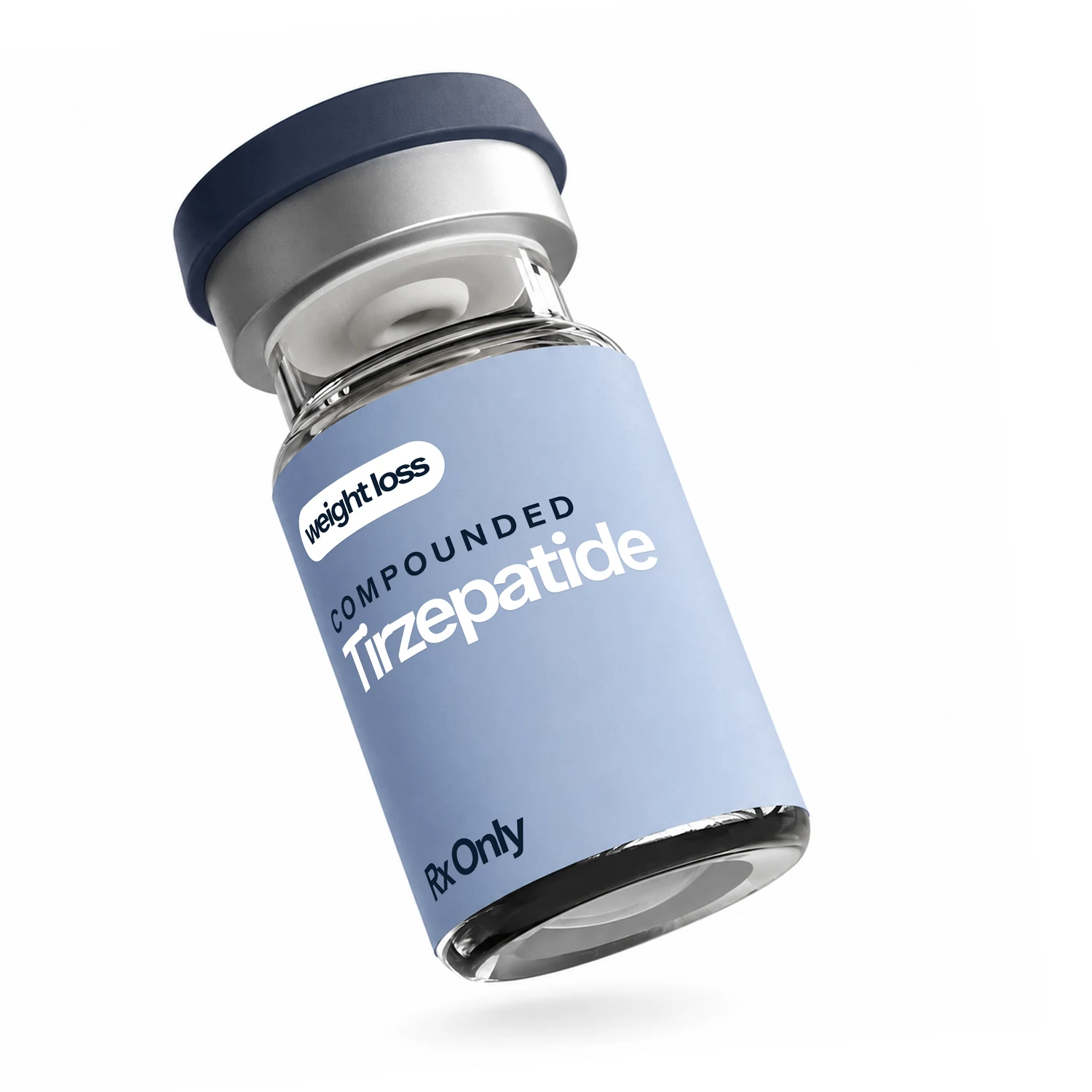
Compounded TirzepatideRx
Weekly GLP-1 + GIP injection.

Compounded SemaglutideRx
Weekly GLP-1 injection.

TadalafilRx
Generic Cialis®. Lasts up to 36 hours.

SildenafilRx
Generic Viagra®. Works in 30 minutes.

FinasterideRx
Generic Propecia®. Blocks DHT daily.

Hair Regrowth SprayRx
3-in-1 topical: finasteride + minoxidil + tretinoin.
Carb Cycling for Men Over 40: The Strategy That Works

Written by Daniel C.
Published February 11, 2026

Key Takeaways
# Carb Cycling for Men Over 40: The Strategy That Works
If you searched "carb cycling men over 40," you already know that standard dieting advice — eat less, move more — has stopped producing the results it once did. You are not imagining it. The metabolic reality of a man at 45, 52, or 63 is different from what it was at 28. This article explains what carb cycling is, why it fits the physiology of men in this age range, and how to build a sustainable weekly structure around high carb days and low carb days without turning food into a part-time job.
Why Carbs Become a Problem After 40
The core issue is insulin sensitivity. As men age, the body's cells become progressively less responsive to insulin, the hormone that moves glucose from the bloodstream into muscle and liver tissue. According to research published in *Diabetes Care*, declining insulin sensitivity accelerates in men after the fourth decade, and it compounds when testosterone levels also drop — a condition documented extensively in the *Journal of Clinical Endocrinology and Metabolism*.
The result is predictable: the same plate of pasta that fueled a long run at 30 now parks itself as visceral fat at 50. This is not a character flaw. It is a hormonal and metabolic shift with a documented biological basis. The question is not whether to address it, but how.
Blanket low-carb diets are one answer, and they work for some men. But for a man who trains with weights, coaches a youth sports team on Saturday mornings, and still wants to sit down to a family dinner without building a separate meal for himself, a permanent near-zero carb protocol creates friction that compounds over months. Carb cycling offers a more precise approach.
What Carb Cycling Actually Is
Carb cycling is a structured rotation of higher-carbohydrate eating days and lower-carbohydrate eating days within a weekly or biweekly calendar. It is not a new concept. Athletes and physique competitors have used it for decades. What makes it relevant for men over 40 specifically is the alignment between carbohydrate intake and two variables that shift considerably with age: insulin sensitivity and physical activity demand.
On a high carb day, carbohydrate intake rises — typically to 150–250 grams depending on body weight and activity — to replenish muscle glycogen, support harder training sessions, and prevent the hormonal suppression (particularly of leptin and thyroid hormones) that extended low-calorie eating can trigger. On a low carb day, intake drops — often to 50–100 grams — pushing the body toward fat oxidation while insulin remains low and glucagon rises.
The practical effect, according to peer-reviewed research, is that the body never fully adapts to restriction. The metabolic slowdown that typically accompanies sustained caloric deficits is partially offset by the periodic carbohydrate reload. This is a meaningful advantage for a man in his 50s whose resting metabolic rate has already declined compared to his younger years.
Building a Weekly Structure
The simplest entry point for a man over 40 is a three-tier weekly model:
High carb days (1–2 per week): Align these with your most demanding training days — a heavy compound lifting session, a long run, or a demanding athletic activity. Carbohydrate sources should be whole food: rice, oats, sweet potatoes, fruit. Processed sugars and refined flour do not produce the same glycogen-replenishment effect and spike insulin without the associated nutritional value.

Moderate carb days (2–3 per week): These are standard active days. Carbohydrate intake sits in the middle range, sufficient to maintain energy for work and light activity but not so high as to override the fat-oxidation you are building.
Low carb days (2–3 per week): Rest days and light-activity days. Protein and fat carry the day. This is where the body draws from stored fat most efficiently. Insulin stays low. Hunger is managed through adequate protein — a target of 0.7 to 1.0 gram per pound of bodyweight is supported by research in the *American Journal of Men's Health*.
The beauty of this model for a man in this demographic is that it maps naturally to how most weeks already unfold. Monday might be heavy weights — high carb. Tuesday is a busy desk day — low carb. Saturday is a morning hike or a round of golf followed by a family dinner — moderate or high carb. The structure follows life rather than fighting it.
Carb Cycling for Weight Loss: What the Evidence Says
For carb cycling for weight loss in men, the mechanism is straightforward. On low carb days, reduced insulin allows adipose tissue to release stored fatty acids for fuel. On high carb days, the hormonal environment shifts to support muscle retention and recovery. The net result, when protein intake is kept high and total weekly calories remain in a modest deficit, is a greater proportion of weight lost from fat rather than muscle.
This matters more at 50 than at 25 because lean muscle mass is harder to rebuild as testosterone and growth hormone decline with age. A man who loses 20 pounds but loses a significant share of that as muscle has not improved his metabolic position. He has worsened it — his resting metabolic rate drops further, and the weight returns faster. Strategies that preserve muscle while losing fat are not vanity. They are metabolic maintenance.
A note worth raising during American Heart Month: the relationship between excess visceral fat and cardiovascular risk is well established. But men over 45 should also know that erectile dysfunction is frequently the first clinical signal of cardiovascular disease — appearing years before a cardiac event. The American Urological Association recognizes ED as a vascular marker. Managing body composition through strategies like carb cycling is not separate from heart health. For many men, it is part of the same equation.
Practical Notes Before You Start
A few points that tend to trip men up:
Protein is non-negotiable on every day. The carbohydrate rotation only works as intended when protein intake is consistent and adequate. Without it, low carb days become catabolic rather than restorative.
Hydration shifts with carbohydrate intake. Glycogen binds water. On low carb days, water loss increases. This is not fat loss; it is fluid. Stay ahead of it.
Sleep is the underrated variable. Research published in the *Journal of Clinical Endocrinology and Metabolism* links poor sleep directly to insulin resistance and elevated cortisol, both of which undermine carb cycling protocols. A strategy built on food timing cannot fully compensate for chronic sleep deficit.
Give it four to six weeks. The first week often feels like water weight fluctuation. Metabolic adaptation takes longer than a single rotation. Results may vary.
Where Good Guy Rx Fits
Good Guy Rx is a technology platform. It connects men to independent licensed physicians and independent state-licensed pharmacies. It does not manufacture medications and is not itself a pharmacy.

For a man over 40 who is ready to address weight and metabolic health with clinical support — not just nutrition strategy — the platform offers a structured starting point. If after reviewing your health history an independent licensed physician determines that a medical weight-loss protocol is appropriate, options may include compounded semaglutide or tirzepatide, prepared by state-licensed compounding pharmacies in accordance with FDA regulations. These are not FDA-approved compounded medications, and they are not appropriate for every patient. A licensed provider makes that determination.
The right starting point is the weight loss assessment. It takes a few minutes, and it puts your information in front of an independent licensed physician who can evaluate whether clinical support is warranted alongside any nutrition strategy you are building.
Carb cycling is a sound dietary framework. For men whose metabolic picture involves more than food timing — declining testosterone, significant visceral fat accumulation, elevated cardiovascular risk markers — a clinical conversation adds context that no article can provide.
What to Do Next
- Map your current week. Identify your two hardest training days. Those become your first high carb days. Rest days become low carb days. Everything else is moderate.
- Set your protein floor. Determine your target in grams — body weight in pounds multiplied by 0.8 is a reasonable starting point — and hit it every day regardless of carb tier.
- Run one full cycle before adjusting. Fourteen days of consistent execution gives you data. Week one is not a fair sample. Do not change the protocol based on how you feel on day four.
- Take the [weight loss assessment](https://care.goodguyrx.com/start-online-visit/weight-loss) if body composition is a priority alongside metabolic health. An independent licensed physician can evaluate whether nutrition strategy alone addresses your full clinical picture.
Sources
- Insulin Resistance and Aging in Men — *Diabetes Care* — https://diabetesjournals.org/care
- Testosterone Decline and Metabolic Health — *Journal of Clinical Endocrinology and Metabolism* — https://academic.oup.com/jcem
- Protein Requirements for Active Men — *American Journal of Men's Health* — https://journals.sagepub.com/home/ajm
- Sleep, Cortisol, and Insulin Resistance — *Journal of Clinical Endocrinology and Metabolism* — https://academic.oup.com/jcem
- Erectile Dysfunction as a Cardiovascular Marker — American Urological Association — https://www.auanet.org/
- STEP Trials: Semaglutide for Weight Management — *New England Journal of Medicine* — https://www.nejm.org/
- SURMOUNT Trials: Tirzepatide for Weight Management — *New England Journal of Medicine* — https://www.nejm.org/
This article is for informational purposes only and does not constitute medical advice. Talk with a licensed provider through the patient portal before starting any treatment.
References
- STEP Trial
- SURMOUNT Trial
- [Testosterone Decline and Metabolic Health — *Journal of Clinical Endocrinology and Metabolism* — https://academic.oup.com/jcem](https://academic.oup.com/jcem)
- [Protein Requirements for Active Men — *American Journal of Men's Health* — https://journals.sagepub.com/home/ajm](https://journals.sagepub.com/home/ajm)
- [Sleep, Cortisol, and Insulin Resistance — *Journal of Clinical Endocrinology and Metabolism* — https://academic.oup.com/jcem](https://academic.oup.com/jcem)
- [Erectile Dysfunction as a Cardiovascular Marker — American Urological Association — https://www.auanet.org/](https://www.auanet.org/)
- [STEP Trials: Semaglutide for Weight Management — *New England Journal of Medicine* — https://www.nejm.org/](https://www.nejm.org/)
- [SURMOUNT Trials: Tirzepatide for Weight Management — *New England Journal of Medicine* — https://www.nejm.org/](https://www.nejm.org/)
Share this article

Ready to start your journey?
Complete your free online visit and see if GLP-1 treatment is right for you.
Get Started